What Colorado’s August 2026 Wolf Activity Map Really Tells Us
- WOLF EMPIRE

- 2 days ago
- 15 min read
From GPS Signals in Western Watersheds to the Wider Story of Wolves in the United States
At first glance, Colorado Parks and Wildlife’s August 2026 wolf map appears to show an enormous sweep of wolf country. Purple-shaded watersheds stretch across much of northwestern and west-central Colorado, from the state’s northern border through mountain counties and south toward the Gunnison Basin.

But the map is not a wolf population map. It is not a map of occupied territory, wolf density, pack boundaries or current wolf locations. It is something more limited—and, when read correctly, extremely valuable.
Published by Colorado Parks and Wildlife on August 26, 2026, the map summarizes GPS data collected between July 21 and August 25. A watershed is shaded when at least one location from a GPS-collared wolf was recorded within that watershed during the reporting period. One wolf passing briefly through one corner of a watershed is enough for the entire unit to appear purple.
That distinction is essential. The map shows where collared wolves generated GPS locations during approximately one month. It does not show that wolves used every part of a highlighted watershed, that they remained there, or that wolves are present there today.
It also omits every wolf that was not wearing a functioning collar.
According to Colorado Parks and Wildlife’s explanation of the map, the collars are programmed to record a location every four hours. Once four locations have been collected, the group of positions is transmitted by satellite. Dense cloud cover, enclosed terrain and other environmental conditions can delay either the recording or transmission of data.
The result is not a live tracking system. It is a carefully generalized record of recent activity.
Why Colorado Uses Watersheds Instead of Dots
CPW deliberately does not publish precise wolf coordinates. Exact locations could expose wolves to illegal killing, disturb den and rendezvous areas, create unnecessary conflict on private land and encourage people to approach animals that should remain wary of humans.
Instead, the agency uses HUC-10 watersheds—hydrologic units created by the U.S. Geological Survey. Each unit represents land draining into a particular stream or water body.
Watersheds are more biologically meaningful than county lines because wolves respond to terrain, prey, snow conditions, water, forest cover and travel corridors—not political boundaries. River valleys and mountain passes can guide movement, while steep ridges, human development and seasonal prey migrations may alter it.
However, HUC-10 units are still large. Shading an entire unit necessarily exaggerates the visual footprint of an individual GPS point. This protects sensitive location information but means that readers must resist interpreting the purple areas as continuously occupied wolf range.
The map’s most defensible conclusion is therefore simple:
During the July 21–August 25 reporting period, GPS-collared wolves were active across a broad and increasingly connected portion of western Colorado.
The purple watersheds include portions of Moffat, Routt, Jackson, Grand, Rio Blanco, Garfield, Eagle, Pitkin, Delta and Gunnison counties, among other western areas. The pattern is concentrated west of the Continental Divide, with no comparable band of recorded collared-wolf activity across Denver, the Front Range or the eastern plains during this reporting period.
Even that description must be qualified. The absence of purple does not prove the absence of wolves. An uncollared wolf could pass through an unshaded watershed without appearing on the map.
A Large Geographic Footprint Does Not Require a Large Population
One of the most striking lessons of the August map is how much ground a relatively small wolf population can cover.
Wolves are built for movement. They have long legs, large feet and exceptional endurance. Established packs usually concentrate their activity within defended territories, while young dispersing wolves may travel very long distances in search of a mate, vacant habitat or another pack.
A wolf population can therefore produce a large movement footprint long before it becomes numerically large.
The purple areas also reflect the accumulation of positions over more than a month. The map visually combines every qualifying collared-wolf location recorded throughout that period. It does not show how many wolves generated the positions or how long any animal stayed within a particular watershed.
This is why a movement map and a population estimate answer fundamentally different questions:
Measurement | Question it answers | What it cannot establish |
Monthly watershed activity map | Where did collared wolves generate GPS points during the reporting period? | Total population, current location or wolf density |
Minimum population count | How many individual wolves could biologists verify during a defined survey period? | The exact number of wolves on every day of the year |
Pack territory map | What area is used repeatedly by an established pack? | Every exploratory or dispersal movement |
Confirmed sighting | Was a wolf verified at a particular place and time? | Whether a permanent pack or territory exists there |
Public sighting report | Where might a wolf have been observed? | Species identity unless supported by strong evidence |
How Many Wolves Are in Colorado?
The latest comprehensive official count comes from CPW’s 2025–2026 Colorado Gray Wolf Annual Report, covering the biological year from April 1, 2025, through March 31, 2026.
CPW identified a minimum of 32 gray wolves in Colorado:
18 adults
14 pups
24 wolves belonging to four established packs
Eight dispersing adults outside those packs
The four packs contained ten adults and 14 pups at the time of the winter minimum count. CPW emphasized that this was a minimum, not a claim that exactly 32 wolves existed in the state.
Winter is generally the best time to conduct such counts because packs are more likely to travel together, pups are large enough to be detected, tracks are easier to find and vegetation is less likely to obstruct observations. Even then, uncollared immigrants, recently dispersed animals and young wolves may be missed.
CPW’s current map page states that the agency was monitoring four reproducing packs in northwestern Colorado during the July–August 2026 map period. At approximately four months old, pups were beginning to move short distances with other pack members and use rendezvous sites rather than remaining near their original dens.
Rendezvous sites function as temporary summer gathering areas. Adults leave to hunt and return with food for the pups. As the pups grow stronger, their movements expand, and the pack gradually becomes more mobile.
The 32-wolf figure should therefore be described as Colorado’s latest official annual minimum—not as a real-time August total. Births, deaths, dispersal, collar failures and movement across state boundaries can all change the number between annual reports.
From 25 Translocated Wolves to a Reproducing Population
Colorado’s current population emerged from a combination of natural migration, deliberate reintroduction and reproduction.
Gray wolves historically occupied Colorado but were systematically eliminated through shooting, trapping and poisoning. CPW states that wolves had been eradicated from the state by the 1940s.
In November 2020, Colorado voters approved Proposition 114, directing the state to restore wolves west of the Continental Divide. The measure became Colorado Revised Statute 33-2-105.8.
Ten wolves from Oregon were released in December 2023. Fifteen more were brought from British Columbia in January 2025, bringing the total number of translocated wolves to 25. In addition, wolves had previously entered northern Colorado naturally from Wyoming.
The Colorado Wolf Restoration and Management Plan originally anticipated translocating approximately 30 to 50 wolves over three to five years. CPW did not conduct another release during the winter of 2025–2026, but reproduction within the state continued.
The presence of 14 pups in the 2025–2026 minimum count was significant. It showed that multiple wolves had found mates, established territories, reproduced and raised young through the most vulnerable months of early life.
At the same time, adult survival remained a serious concern. CPW documented ten adult wolf mortalities during the 2025–2026 biological year and calculated an estimated adult survival rate of 61 percent. The mortalities included legal take outside Colorado, a vehicle collision, trauma following entrapment in a legally set foothold trap, a management removal related to chronic livestock depredation and a capture-related death. Several cases were still under investigation when the annual report was released.
The combination of strong pup recruitment and substantial adult mortality captures the complexity of the program: Colorado’s wolf population was growing, but it was not insulated from biological and human-caused losses. These figures are reported in CPW’s official 2025–2026 annual-report discussion.
The Wolves in Colorado Are Gray Wolves
All of Colorado’s established wolves are managed as gray wolves, Canis lupus. They should not be confused with Mexican wolves, red wolves, coyotes or domestic wolf-dog hybrids.
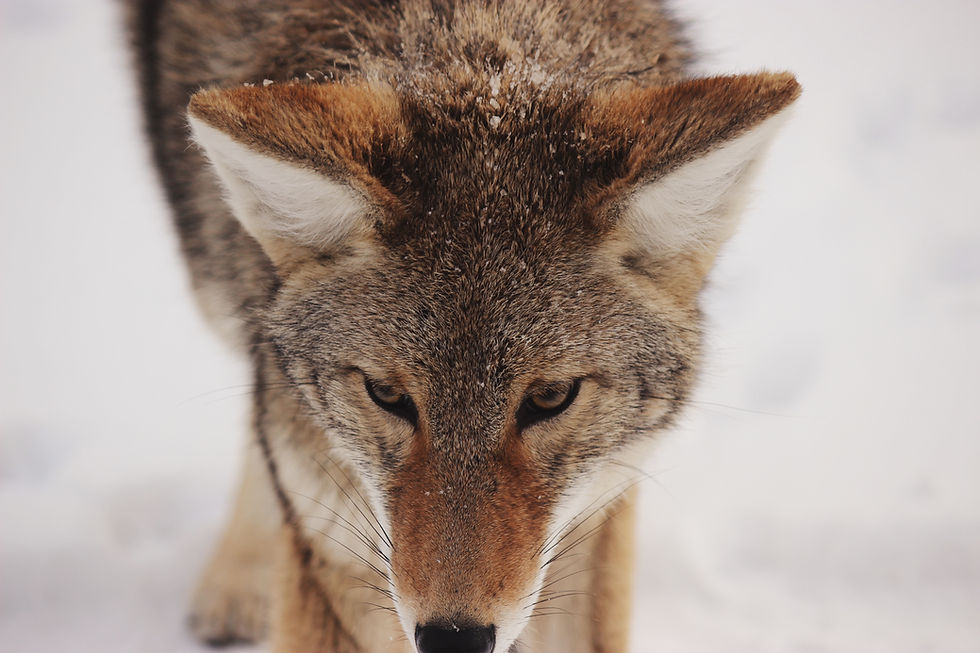
Adult Colorado gray wolves are substantially larger than coyotes. CPW reports that adult males typically weigh approximately 90–110 pounds, while adult females commonly weigh 80–90 pounds. A wolf may exceed five feet in length from its nose to the end of its tail.
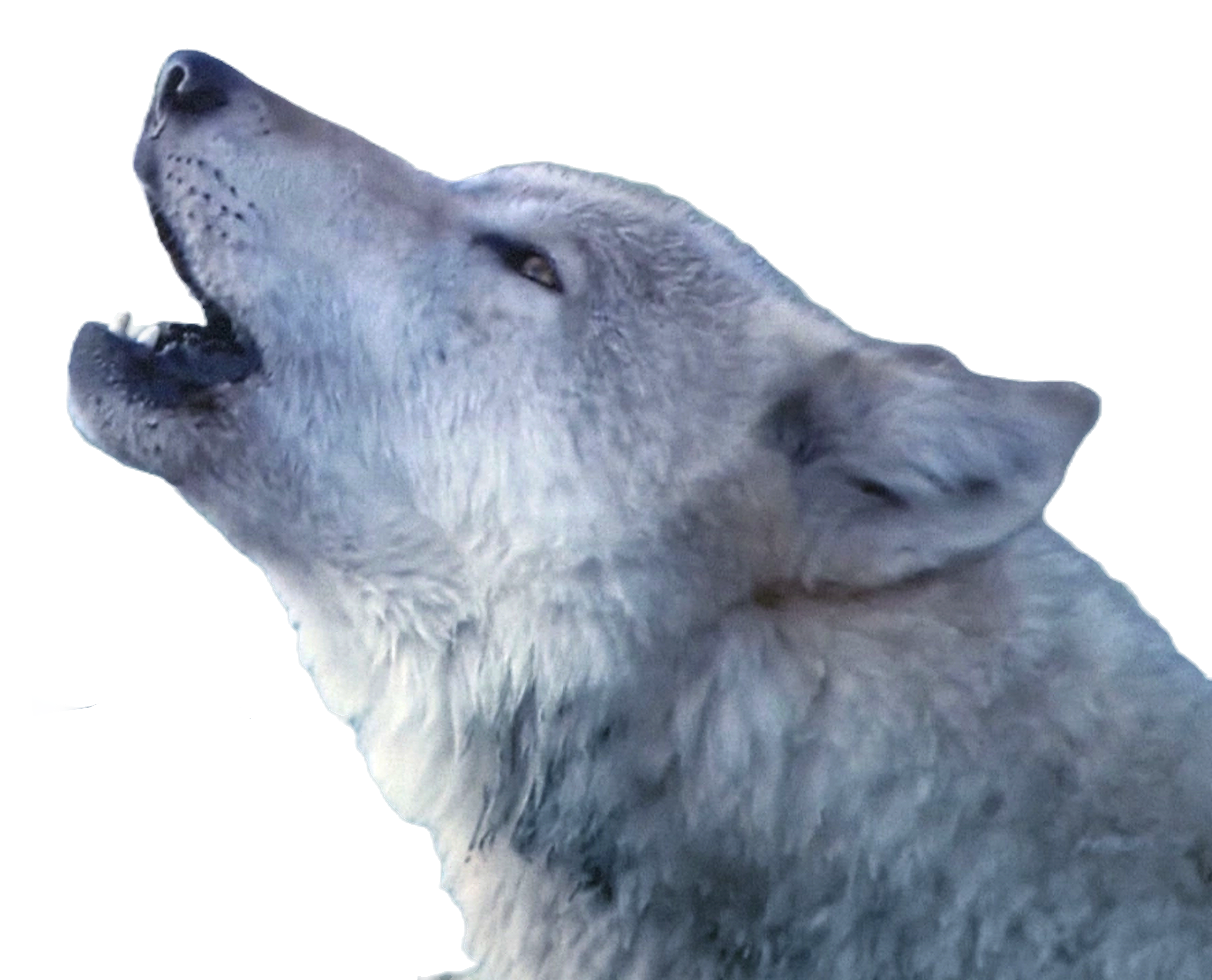
Color is not a reliable way to identify the species. Despite the name “gray wolf,” individuals may be gray, black, brownish, buff, nearly white or a mixture of colors. A black wolf is not a separate species; it is a color form of the gray wolf.
The terms “timber wolf” and “gray wolf” are also frequently used for the same species. Regional wolf populations can differ in size, genetics, diet and appearance, but common names do not always correspond to scientifically separate species.
The Main Types of Wolves in the United States
The United States has two officially recognized wild wolf species and one especially important gray-wolf subspecies:
1. Gray Wolf — Canis lupus
The gray wolf is the largest wild member of the dog family and the species found in Colorado, Alaska, the northern Rocky Mountains, the Great Lakes region and several western states.
The U.S. Fish and Wildlife Service reports an adult weight range of approximately 40–175 pounds across the species’ enormous geographic range. Northern and Alaskan wolves tend to be larger, while wolves from warmer, more southerly environments are generally smaller.
Gray wolves are habitat generalists. They can live in forests, mountains, tundra, grasslands, deserts and coastal environments as long as sufficient prey and tolerable levels of human-caused mortality exist.
2. Mexican Wolf — Canis lupus baileyi
The Mexican wolf is a subspecies of the gray wolf—not a separate species. It is smaller than many northern gray wolves and historically occupied parts of the American Southwest and Mexico.
It is also one of the most intensively managed wolf populations in the world. The modern recovery program descended from only seven founding wolves, making genetic diversity a central concern.
The latest published USFWS annual count documented a minimum of 286 wild Mexican wolves in the United States at the end of 2024, an 11 percent increase over the previous year and the ninth consecutive year of population growth.
That count included:
At least 60 packs
A minimum of 164 pups born during 2024
At least 79 pups surviving to the end of the year
A first-year pup survival rate of approximately 48 percent
These animals live primarily in Arizona and New Mexico. CPW explicitly states that Mexican wolves are not part of Colorado’s reintroduction program. Colorado is restoring northern gray wolves, while the Mexican Wolf Experimental Population Area is centered farther south.
3. Red Wolf — Canis rufus
The red wolf is a separate species and the most endangered wolf in the United States. It once occupied a large area of the eastern and south-central country but was declared extinct in the wild in 1980.
A reintroduction program established a wild population in eastern North Carolina. That population rose to approximately 120 animals in 2012 before declining dramatically as a result of human-caused mortality, vehicle strikes, small population size and hybridization with coyotes.
As of August 2026, the USFWS Red Wolf Recovery Program reported:
21 known collared wild red wolves
An estimated 22–23 wild adults and subadults
An additional 14–15 wild pups
Approximately 295 red wolves in managed conservation facilities
The red wolf’s situation is therefore fundamentally different from Colorado’s. Colorado is building a new population of a widely distributed species. Red-wolf biologists are trying to prevent the disappearance of an entire species whose single wild population remains extremely small.
Official Wolf Population Statistics Across the United States
There is no single real-time national wolf count. Wildlife agencies use different methods, survey seasons and definitions. Some figures are statistical estimates; others are verified minimum counts. They should not be added together as though they came from one synchronized census.
The most useful official figures are regional:
Population or region | Latest useful official figure | What the figure represents |
Alaska gray wolves | 7,000–11,000 | Statewide estimate; wolves occupy approximately 85% of Alaska |
Western United States gray wolves | Approximately 2,797 wolves in at least 286 packs | USFWS standardized synthesis using data through the end of 2022 |
Minnesota gray wolves | Management range of approximately 2,200–3,000 | State management range reflecting recent estimates |
Wisconsin gray wolves | Most likely estimate: 1,226 | 2024–2025 winter estimate; statistical range 1,087–1,379 |
Michigan gray wolves | Minimum of 792 | 2026 winter-track estimate for the Upper Peninsula |
Colorado gray wolves | Minimum of 32 | Winter minimum reported for the 2025–2026 biological year |
U.S. Mexican wolves | Minimum of 286 | End-of-2024 count in Arizona and New Mexico |
Wild red wolves | 22–23 adults/subadults plus 14–15 pups | August 2026 estimate for eastern North Carolina |
Alaska remains the country’s great wolf stronghold. The Alaska Department of Fish and Game estimates that 7,000–11,000 wolves inhabit the state. They occupy most of mainland Alaska, Unimak Island and many southeastern islands.
In the contiguous United States, the two largest gray-wolf concentrations are the western Great Lakes and the West.
Minnesota alone supports roughly 2,200–3,000 wolves under its current state management framework. During Wisconsin’s 2024–2025 winter monitoring period, the Wisconsin Department of Natural Resources estimated 1,087–1,379 pack-associated wolves, with 1,226 as the most likely value, distributed among an estimated 299–373 packs.
Michigan’s traditional winter-track survey produced a 2026 minimum estimate of 792 wolves in the Upper Peninsula. A newer camera-based study demonstrated how dramatically seasonal estimates can change: monthly results ranged from 525 wolves in March 2025 to 1,198 in October 2024. The difference does not mean that hundreds of wolves suddenly appeared or vanished. It reflects reproduction, mortality, changing detectability and seasonal pack behavior. The findings were released by the Michigan Department of Natural Resources.
For the western states, the latest broad federal synthesis reported approximately 2,797 gray wolves in at least 286 packs across seven states at the end of 2022. USFWS concluded that this western population had high genetic diversity and substantial connectivity. That number predates some of Colorado’s reintroduction work and should be treated as a regional benchmark rather than a 2026 national total. The figure comes from the USFWS western gray-wolf assessment.
Why “Minimum Count” Matters
Wildlife population figures often appear more exact than they really are. A count of 32 wolves can sound like biologists know every individual. In reality, the word “minimum” is doing important scientific work.
A minimum count means that managers documented at least that many animals. The true number could be higher.
Wolves are difficult to count because they:
Travel across enormous areas
Cross state and international boundaries
Spend time in dense forest and rugged terrain
Disperse from their original packs
Lose or damage collars
Produce uncollared pups
May be confused with coyotes or large domestic dogs
Can die without their remains being immediately discovered
Collars are exceptionally useful, but they do not eliminate uncertainty. CPW’s plan is to maintain approximately two functioning collars in each established pack when feasible. As natural reproduction and immigration increase, however, the proportion of Colorado wolves wearing collars will inevitably fall.
This means that the monthly activity map may become less representative as restoration succeeds. Paradoxically, a growing wolf population can make a collar-based map less complete.
Packs, Dispersers and the Creation of New Territories
A wolf pack is best understood as a family rather than a random gathering of unrelated predators. It usually contains a breeding pair, their current pups, older offspring and occasionally other related or accepted animals.
Most packs produce one litter per year. CPW describes a typical litter as four to six pups, although survival varies considerably.
Young wolves eventually face a choice: remain with their family or disperse. A disperser may travel far beyond established wolf range. It must survive roads, unfamiliar terrain, encounters with other wolves, legal differences between jurisdictions and the difficulty of locating a mate.
Those dispersing animals are disproportionately important to geographic expansion. They create the possibility of new pairs and packs, connect previously separated populations and transfer genes across the landscape.
They also help explain the isolated or elongated purple patterns on Colorado’s map. A pack repeatedly using one region creates a compact activity cluster. A disperser can produce a chain of highlighted watersheds extending across several counties.
What Do Colorado Wolves Eat?
Historically, Colorado wolves preyed on bison, elk, deer and other native animals. Today, elk and deer are expected to be their principal large prey, supplemented by smaller mammals and carrion.
Wolves are opportunistic carnivores, and diet varies with location, season and prey availability. Yellowstone provides the country’s most intensively studied example, but its figures should not simply be transferred to Colorado.
The National Park Service reports that elk constitute approximately 90 percent of Yellowstone wolves’ winter prey. Yellowstone wolves also consume bison, deer and smaller animals. The park’s wolf packs average roughly ten animals, but pack sizes and diets can be very different elsewhere.
Colorado is still collecting the data necessary to understand its own developing predator-prey system. CPW is preparing long-term studies of wolf effects on prey populations, vegetation, elk movements, elk group size and moose recruitment.
In May 2026, CPW’s wildlife researchers cautioned that Colorado’s wolf population was still too small and too recently established to support conclusions about widespread ecosystem effects.
That is an important scientific boundary. Colorado is not yet Yellowstone, and Yellowstone itself is more complex than the popular claim that wolves single-handedly “fixed” the ecosystem.
Wolves and Ecosystems: Beyond the Simplified Trophic-Cascade Story
As apex predators, wolves can affect prey abundance, prey behavior, carcass availability and competition among predators. Their kills provide food for ravens, eagles, bears, coyotes and many scavenging species.
Yet ecological responses depend on water, vegetation, climate, hunting, other predators, human development and the density and movements of prey.
The National Park Service’s review of the Yellowstone trophic-cascade debate explains that elk do respond to wolf activity, but not through constant landscape-wide fear. Elk responses vary with when and where wolves are active. Vegetation recovery also depends on local conditions, including adequate water.
The scientifically responsible expectation for Colorado is therefore not that wolves will automatically transform every ecosystem they enter. Their effects will probably be uneven, developing gradually and interacting with hunting, drought, recreation, mountain lions, bears, coyotes, habitat quality and human land use.
Livestock Conflict in a Working Landscape
The purple watersheds are not only biologically interesting. Many overlap cattle and sheep operations, which is one reason CPW publishes monthly activity information.
Wolf attacks represent a small fraction of statewide livestock numbers, but losses can be concentrated on particular properties and can carry costs beyond the value of the confirmed carcass. Producers may face stress, additional labor, altered grazing patterns, missing animals, reduced weight gain and the expense of preventive measures.
CPW’s restoration goal therefore includes both the development of a viable wolf population and the reduction of conflict with livestock.
During the 2025–2026 biological year, CPW reported major expansion of its conflict-minimization program:
More than 280 cumulative ranch-site assessments
12 night-watch events during the reporting year
61 scare devices deployed
More than 13 miles of fladry installed at 15 locations
More than 4,300 hours of contracted range riding
Nearly 15,000 miles covered by range riders
Assistance provided to 34 livestock producers
Fladry consists of lines fitted with hanging flags that exploit wolves’ caution toward unfamiliar objects. Electrified fladry adds a physical deterrent. Range riders increase human presence, monitor livestock and wolf activity, remove attractants and respond quickly to developing risks.
No method works everywhere or forever. Wolves can become accustomed to deterrents, landscapes differ and livestock operations vary greatly. Effective conflict reduction therefore requires local adaptation rather than a single universal solution.
Legal Status: A Complicated National Patchwork
The legal status of gray wolves differs across the United States.
As of July 2026, the U.S. Fish and Wildlife Service states that gray wolves are federally endangered across most of the contiguous United States, threatened in Minnesota and under state or tribal jurisdiction in most of the Northern Rocky Mountain region.
Colorado’s restored population is designated a nonessential experimental population under Section 10(j) of the Endangered Species Act. That designation allows more management flexibility than would generally exist for a fully endangered population. Wolves are also classified as endangered under Colorado law.
The public cannot legally kill, harm or harass a Colorado wolf except under narrowly defined circumstances such as immediate defense of human life or authorized management actions. A wolf crossing into another state may encounter very different legal conditions, which contributed to some of the mortalities recorded in Colorado’s annual report.
Mexican wolves and red wolves have their own separate federal listings and recovery rules.
What the August 2026 Map Suggests About Colorado’s Future
The August map shows a population in transition.
The northern watersheds reflect the center of Colorado’s earliest pack formation and connections with wolves moving through the northern Rocky Mountain region. The activity extending through west-central Colorado and toward Gunnison demonstrates the species’ capacity to explore and use a much broader portion of the state.
It would be premature to call all of these areas permanent wolf range. Some may represent temporary dispersal routes. Others may develop into stable pack territories. The difference will become clearer only through repeated GPS use, confirmed reproduction and several years of monitoring.
The most important future indicators will not be the total amount of purple on one monthly map. They will be:
The number of breeding packs that persist from year to year
Adult and pup survival
Formation of new pairs and territories
Genetic connectivity with other wolf populations
The proportion of mortality caused by people
Frequency and concentration of livestock conflicts
Effectiveness of nonlethal deterrence and compensation programs
Long-term changes in elk, deer, moose and vegetation communities
Public tolerance as wolves expand into new areas
The increasing number of uncollared wolves that monitoring systems must detect through other methods
A Map of Movement, Not Occupation
Colorado’s August 2026 map is most revealing when its limitations are treated as part of the story.
It does not show hundreds of wolves filling western Colorado. It shows how a small, mobile and partly monitored population can leave a large geographic signal.
It shows that watersheds—not county lines—are useful units for understanding animal movement. It reveals both the power and the incompleteness of GPS monitoring. It captures the early stages of pack establishment while hinting at how quickly wolves can explore new landscapes.
Most importantly, the map marks a moment in Colorado’s ecological history. Less than three years after the first state-directed releases, wolves were reproducing, dispersing and generating GPS locations across a substantial portion of the Western Slope.
Whether those movements develop into a stable, connected and socially sustainable population will depend on far more than biology. It will depend on adult survival, prey, genetic exchange, livestock management, enforcement, funding and the willingness of people with sharply different interests to share the same landscape.
The purple watersheds are therefore neither proof of complete restoration nor evidence that wolves have taken over western Colorado. They are the visible tracks of an unfinished process—a population beginning to test the possibilities and limits of a landscape from which it had been absent for generations.


Comments